
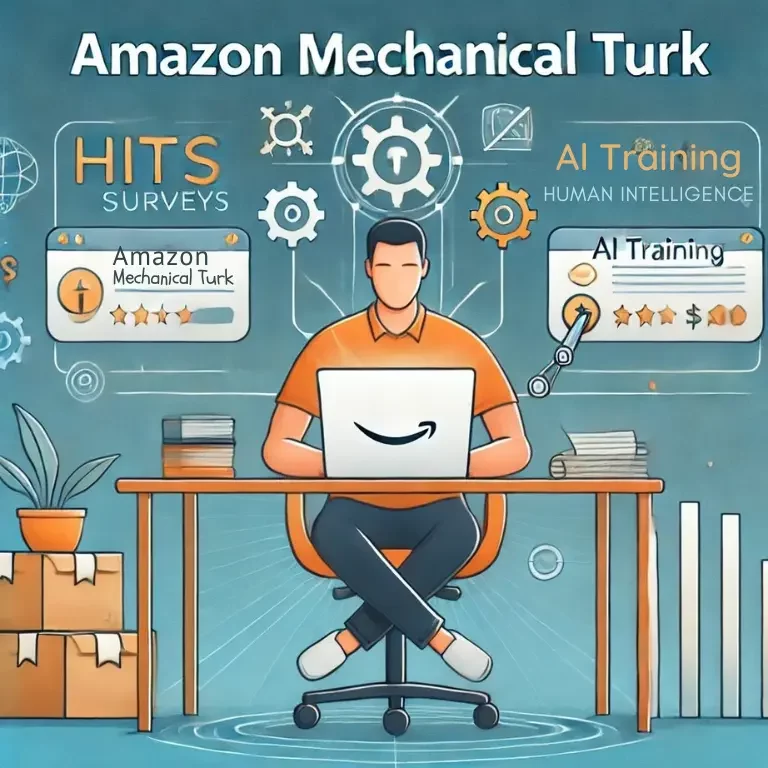
Some internet businesses look clean from the outside because the messy work is hidden in tiny boxes. Mechanical Turk sits in that hidden layer: a marketplace where companies, researchers, and developers post small online jobs that people complete for pay. A requester might need 5,000 images labeled, survey answers screened, receipts typed, or product listings checked. A worker sees a Human Intelligence Task, accepts it, submits it, and waits for approval. That simple loop is why the platform still matters to U.S. businesses that need human judgment at low cost. It is also why the debate around pay never goes away.
For business owners, the lesson is bigger than one Amazon service. The Amazon business platform model shows how speed, low friction, and open pricing can create a useful market while pushing risk onto the people doing the work. If you study platform business model lessons, this one is worth your time because it does not behave like a neat app story. It behaves like a labor market with a checkout button. That makes it powerful, uncomfortable, and easy to misunderstand.
The Platform Works Because It Sells Small Human Judgment at Scale
MTurk is built around a plain idea: break work into pieces small enough for strangers to finish from a browser. Amazon’s own documentation describes a Human Intelligence Task, or HIT, as a self-contained task that a requester submits for workers to perform, such as identifying the color of a car in a photo. Requesters can post tasks, collect responses, and manage results through Amazon’s tools.
The tension starts there. The platform does not sell full employees. It sells access to moments of attention. A business can buy one minute of human judgment without hiring, training, or scheduling anyone. That is useful when software fails at messy edges, such as sarcasm in text, blurry images, odd receipt formats, or survey answers that need human review.
The hidden bargain is speed for responsibility. A requester can open the market fast, but the task itself has to do the work that a manager would normally do. If the task is vague, the crowd does not save the business from poor planning. It magnifies that planning at scale.
Why tiny tasks became valuable to serious companies
A small task can look silly until you multiply it by a million. One person checking whether a photo contains a damaged package is not a business system. Thousands of people checking thousands of photos can become a quality-control layer for an online retailer, logistics team, or machine-learning project.
That is why a crowdsourcing marketplace appeals to companies with uneven workloads. A U.S. startup might need data cleanup before a product launch. A university lab might need survey responses before a paper deadline. A marketing team might need restaurant menu data from different cities. None of those jobs deserve a new department. They need short bursts of help.
The counterintuitive part is that the platform’s strength is not only cheap labor. It is also the avoidance of commitment. Businesses pay for completed units, not idle time. That makes the cost feel clean on a spreadsheet, even when the human experience on the other side feels choppy and uncertain.
A Chicago founder testing a new grocery app could ask workers to check whether store photos match product names. That is not glamorous work. Yet one afternoon of human checking may catch mistakes that would make the app look careless to early customers.
The requester gets control while the worker gets uncertainty
The requester sets the task, the reward, the number of assignments, and the approval rules. Amazon’s pricing page says requesters decide the reward amount for each assignment, while the marketplace charges fees on worker rewards and bonuses. The official MTurk pricing page lists a 20% marketplace fee, plus another 20% for tasks with 10 or more assignments, and a 5% charge for Masters Qualification use.
That fee design matters. It tells you who the paying customer is. The requester funds the work and the platform fee. The worker supplies labor inside a market where the posted reward may or may not reflect the full time spent reading instructions, screening out bad tasks, fixing mistakes, or waiting for approval.
A normal job hides some friction inside wages. Here, friction often sits outside the visible task price. A survey might pay $1.20 and claim to take eight minutes. If it takes 18 minutes, the worker absorbs that difference. If the instructions are flawed, the worker may still carry the cost of trying. The platform did not invent that imbalance, but it makes the imbalance easy to repeat.
There is another wrinkle for business owners. The fee you pay to the platform is not the same as the wage a worker feels. A requester may see a neat project cost. A worker sees a string of bets, each with its own time risk.
The Mechanical Turk Pay Debate Starts With What Time Counts
The hardest pay question is not “what does one task pay?” It is “what counts as work?” A worker is not only clicking bubbles or labeling images. They are searching for decent tasks, reading unpaid instructions, passing screeners, watching for rejections, and learning which requesters have fair habits. Leave that time out and the work looks better than it feels.
A well-known academic study tracked 2,676 workers and 3.8 million tasks, then found a median hourly wage near $2 when unpaid work around task selection and completion was included. The same study found only 4% of workers earned above the U.S. federal minimum wage of $7.25 per hour. Those numbers are old enough to treat with care, but the underlying problem has not aged out: tiny posted rewards can hide large unpaid gaps.
This is why arguments over the worker pay model often become emotional. Requesters talk about task prices. Workers talk about time. Both may be describing the same batch, yet they are measuring different realities.
A posted reward is not the same as an hourly wage
A task that pays 40 cents can be fair, awful, or attractive depending on time. If it takes two minutes, it points toward $12 an hour before search time. If it takes ten minutes, it points toward $2.40. If the worker gets screened out after answering several unpaid questions, the math gets uglier.
This is why the worker pay model has drawn heat from labor researchers and workers. The platform lets requesters price a task at the unit level, yet workers live by the hour. That mismatch creates confusion even when nobody intends harm. A requester may think, “It is only a two-minute study.” A worker may experience, “It took me fifteen minutes to find and finish one that paid.”
A small retail business can learn from this. If you hire crowd workers to tag 2,000 product photos, do not price the work by guessing the fastest possible path. Price it by testing the real path: opening the task, reading the rules, handling edge cases, and submitting without mistakes. The fair number often looks higher after you time the whole experience.
The same logic applies to surveys. A three-minute questionnaire can become a ten-minute maze if the worker has to read dense consent language, pass attention checks, and answer open fields. The pay should follow the maze, not the promise.
Rejection power makes low pay feel riskier
Pay controversy grows sharper when rejection enters the picture. Amazon’s documentation says workers get paid if their work is approved, and workers do not get paid if their work is rejected. It also says submitted work is automatically approved if the requester misses the approval deadline.
That policy can sound balanced from a business view. Requesters need a way to protect themselves from spam, bots, or careless submissions. No buyer wants to pay for useless data. The hard part is that rejection can punish honest workers when instructions are unclear or the requester built the task badly.
There is a quiet business lesson here: low prices make quality control harder, not easier. When pay is thin, the best workers become pickier. They avoid requesters with vague instructions, harsh rejection patterns, or slow approval. A cheap batch may still get finished, but the best available people may never touch it. Bad pricing can buy speed while losing trust.
For a requester, rejection should be a last tool, not a cleanup broom. If ten workers misunderstand the same instruction, the issue is probably the instruction. Paying for the mistake and fixing the task may cost less than burning your reputation with the people you need tomorrow.
What Businesses Gain From the Amazon Business Platform Model
The platform’s appeal is simple: it turns messy human tasks into an operating expense. A company can run a batch in the morning and have results later without adding payroll. That can help small teams punch above their weight, especially when the work is narrow, repetitive, and easy to check.
Still, this is not magic labor. It is a tool with boundaries. MTurk works best when the task is clear, the answer format is simple, and the requester can verify results without insulting good workers. It works poorly when the task needs deep context, emotional care, or long judgment calls that cannot be paid fairly in tiny pieces.
The better way to view the Amazon business platform model is not “cheap labor on demand.” That phrase misses the point. The stronger view is “structured outside judgment.” The structure is what decides whether the project becomes useful evidence or a pile of uneven answers.
Good requester design protects both data and reputation
A good task feels boring in the best way. The worker knows what to do, what counts as success, how long it should take, and how they will be paid. The requester gets cleaner data because fewer people are guessing.
Take a U.S. e-commerce seller cleaning a product catalog. A sloppy HIT might ask workers to “fix titles” with no examples. One worker shortens titles, another adds adjectives, and another rewrites everything. The requester rejects half the batch and blames worker quality. A better task asks workers to choose one of five title problems, shows examples, and pays a fair bonus for edge cases. The data improves because the task stops pretending that judgment is free.
This is where small business automation mistakes connect with crowd work. Business owners often think automation means removing people. In practice, good systems decide where people fit. The cheapest human layer can become expensive if the instructions create waste.
The strongest requesters also build a test batch before the real one. They run 30 tasks, read worker comments, time the workflow, then adjust. That small pause feels slow, but it prevents a bigger mess after 3,000 bad submissions.
The platform is useful when you respect its limits
A crowdsourcing marketplace can be excellent for labeling, checking, sorting, transcribing short pieces, or gathering broad feedback. It is weaker for work that needs protected private data, brand voice, legal judgment, or long-term accountability. A stranger can identify whether a photo contains a stop sign. They should not be asked to make a final decision on a customer’s insurance claim.
The non-obvious insight is that the worker’s distance from your company is sometimes a feature. Workers do not carry your office politics. They can spot confusing wording, broken forms, or strange product photos like outsiders because they are outsiders. That fresh distance can be useful.
Yet distance also means responsibility sits with the requester. You cannot rely on culture, shared meetings, or follow-up coaching. The task itself must carry the management. Clear examples, fair pay, respectful rejection rules, and honest time estimates are not soft extras. They are the operating system.
A practical rule helps: if a task needs a meeting to explain, it may not belong in a microtask market yet. Break it down, remove private details, add examples, and test whether a stranger can do it without guessing.
Why the Controversy Has Lasted Into the AI Era
It might seem odd that a microtask site still matters when AI tools can label, summarize, and classify at high speed. The opposite happened in many corners. AI increased demand for human checks. Models need training data, safety feedback, preference ratings, content review, and spot checks when automated systems fail.
That puts the old pay debate in a newer frame. The worker is no longer only helping a survey researcher or a small business. In some tasks, the worker becomes part of the invisible supply chain behind smarter software. When that labor is paid poorly, the final product may look advanced while its human foundation stays underpriced.
Amazon itself connects MTurk-style labor to data annotation and human verification in machine-learning workflows through related AWS pages. That does not make every microtask an AI task. It does show why human judgment remains valuable even when the marketing story says software is doing the hard part.
Human feedback still sits behind automated systems
AI systems often need people to judge which answer is better, whether a label is accurate, or whether a piece of content violates a rule. Some of that work goes through specialized vendors, but the basic logic resembles MTurk: split judgment into small units, send it to a dispersed workforce, collect the answers, and feed them back into a system.
The business temptation is obvious. If human review is treated as a commodity, managers chase the lowest unit cost. That can work for narrow tasks. It can fail badly when the work requires cultural context, care, or attention to harm. A two-cent label may look efficient until it teaches the wrong pattern at scale.
Researchers have also pointed to transparency as a pay problem. One study on wage prediction for microtasks found workers often struggle to know the true hourly value of tasks before they accept them because task descriptions and requester signals can be noisy. That is not a minor interface issue. It shapes who earns, who quits, and who gets stuck doing bad work.
The strange part is that transparency helps both sides. Workers can avoid poor tasks. Requesters can price work with fewer guesses. A market with clearer time signals may cost more per task, but it can waste less human effort.
Fair pay can be a quality strategy, not charity
The better argument for fair pay is not guilt. It is performance. Workers who trust a requester are more likely to return, learn the task style, and avoid careless submissions. Requesters who pay decently often spend less time cleaning bad data, arguing over rejections, and repairing reputation in worker communities.
That does not mean every small business must pay Silicon Valley contractor rates for a ten-second tag. It means the price should match the real task, not the fantasy version. Test the work yourself. Add reading time. Add edge-case time. Add a margin for the cognitive load that comes from doing repetitive judgment on a screen.
The worker pay model became controversial because it exposed a habit many businesses already had: treating human attention as a cheap ingredient instead of a business input with limits. MTurk did not create that habit. It made the receipt easier to see.
A healthier market does not need perfect generosity. It needs honest math. When requesters count the whole task, workers can make better choices, and businesses get work from people who are not rushing through frustration.
Conclusion
Crowd work sits in an awkward place between software and employment. It gives businesses a fast way to buy human judgment, but it also reminds workers how thin digital labor can feel when pay, time, and risk do not line up. The platform is not useless, and it is not harmless. It is a tool that reflects the ethics of the people using it.
For U.S. business owners, the strongest takeaway is simple: cheap tasks are not automatically smart tasks. Mechanical Turk still matters because companies need humans where software remains brittle. But the best requesters treat people as part of the quality system, not as a disposable cost line. They write better instructions, test real completion time, pay for the hidden labor around the task, and reject work only when the standard was clear from the start.
Use the platform carelessly and it will give you quick answers with weak trust. Use it responsibly and it can turn scattered human effort into useful business insight. Choose the second path before the market forces you there.
Frequently Asked Questions
How does MTurk work for businesses?
Businesses post small online tasks, set a payment amount, choose how many workers they need, and review submitted answers. The best use cases are narrow jobs with clear instructions, such as image tagging, short transcription, survey screening, or data cleanup.
Is the pay on MTurk good for workers?
Pay varies by task, requester, speed, and rejection risk. Many workers report low earnings unless they learn which tasks to avoid and which requesters pay fairly. The main issue is that unpaid search and screening time can reduce the real hourly rate.
Why do companies use crowd workers instead of employees?
Companies use crowd workers when the work is temporary, repetitive, or too small for a full role. It can save time and hiring cost, but it works best only when the task is clear enough for strangers to complete without training.
What makes the pay model controversial?
The controversy comes from unit-based rewards, unpaid task-search time, possible rejections, and uneven requester behavior. A task may look fair on its face, yet become poor-paying after the worker spends time reading, qualifying, correcting errors, or waiting for approval.
Can MTurk be used for AI training data?
Yes, many crowd-work tasks fit AI data needs, including labeling images, rating answers, checking categories, and reviewing content. The risk is that poor task design or low pay can harm data quality, especially when the judgment requires context or care.
What should requesters do to pay fairly?
Requesters should test the task from a worker’s view, include reading and submission time, explain standards clearly, and pay bonuses when work takes longer than expected. A fair task should make the expected hourly value easy to understand before acceptance.
Are rejected tasks paid to workers?
Rejected assignments are not paid, which is why rejection policy matters. Requesters should reject only when instructions were clear and the submitted work plainly failed the standard. Honest mistakes caused by poor task design should be fixed through better instructions.
Is MTurk still useful for small businesses?
It can be useful for small businesses with clean, limited tasks that need human review. It is a poor fit for sensitive customer decisions, complex writing, legal judgment, or any work where the worker needs deep company context to perform well.