
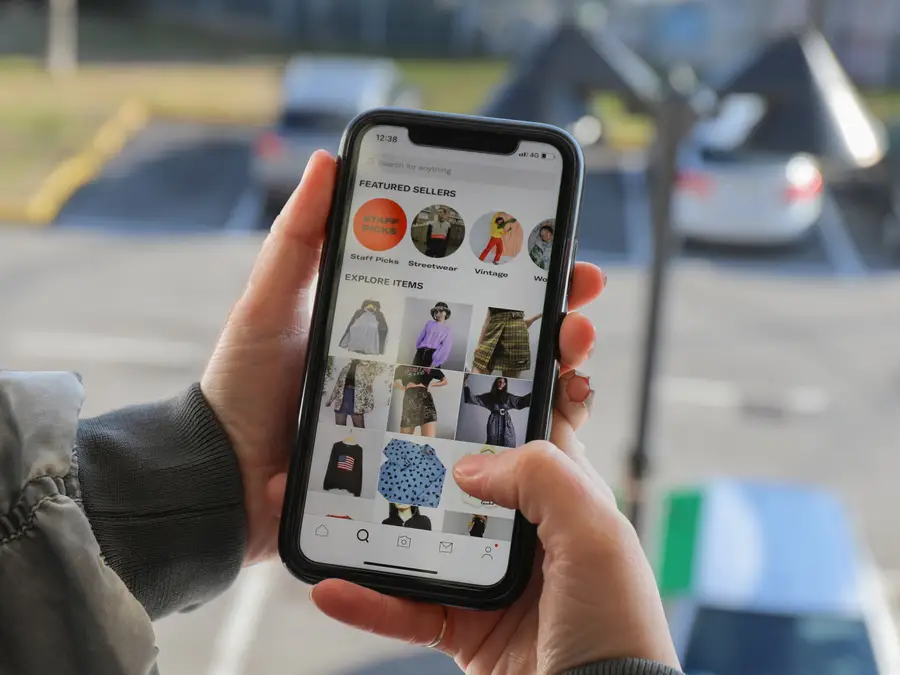
For anyone trying to turn closet cleanouts into repeat income, Depop looks simple until the fees, buyer behavior, shipping choices, and sourcing math start pressing on the margin. The Depop Secondhand Fashion model matters because it is not a plain listings board; it is a social shopping app where taste, timing, trust, and transaction costs decide whether a $38 jacket becomes profit or clutter. Depop earns through buyer-side marketplace fees, payment processing, optional listing boosts, and seller fees in certain markets, while U.S. resellers earn only after cost of goods, postage choices, packaging, refunds, and time are counted. That is the gap many new sellers miss. A shop can look busy and still underpay its owner. For readers comparing resale platforms, digital marketplace growth stories show the same pattern again and again: the best operators do not chase volume first. They understand how the platform gets paid, then build their pricing around it.
How Depop Secondhand Fashion Turns Social Browsing Into Revenue
Depop grew by making resale feel less like a garage sale and more like a personal feed. A buyer does not only search for “black leather jacket.” She follows sellers, notices styling, saves items, likes a few posts, and returns later when payday or an outfit idea gives her a reason to buy. That social layer is not decoration. It is the demand engine. Depop’s own newsroom said the marketplace had about 7 million active buyers and more than 3 million active sellers at the end of 2025, with nearly 90% of buyers under 34, which explains why fashion taste and identity carry so much weight on the app. The business lesson for resellers is clear: Depop is not built around inventory alone. It is built around desire, and desire needs context.
The feed works like a small storefront
A strong Depop shop feels like a rack in a well-edited thrift boutique. The seller has a point of view. Maybe it is Y2K denim, faded band tees, workwear jackets, or clean neutral basics for college students. The item can be secondhand, but the presentation cannot feel second-best.
That is where the revenue model starts to make sense. Depop earns when attention turns into checkout activity, so it has reason to push discovery, recommendations, buyer confidence, and repeat visits. The reseller, on the other side, earns when the same attention lands on items with enough margin left after fees and shipping. One side wants more transactions. The other needs better transactions. The tension is healthy when the seller knows it exists.
A common U.S. example is a seller who sources a vintage NASCAR tee for $8, photographs it on a clean wall, lists it at $32, and accepts an offer at $27. That sale may look healthy from the outside. But the real question is whether the seller picked the right tee, priced room for offers, avoided overpaying for postage, and kept the buyer from hesitating at checkout. The photo made the buyer stop. The math decides whether the seller should celebrate.
Why buyer fees still shape seller pricing
Depop says U.S. and U.K. sellers pay no Depop selling fee on eligible listings, while U.S. Depop Payments processing is 3.3% plus $0.45 on the item price plus shipping and any applicable taxes. The same fee page also lists a 12% boosting fee for boosted listings in the U.S. and U.K. on new listings from March 23, 2026.
That sounds friendly to sellers, and in many ways it is. The non-obvious part is that a fee moved to the buyer can still affect the seller. Depop’s marketplace fee for buyers in the U.S. and U.K. can be up to 5% of the item purchase price plus up to $1, excluding taxes and shipping, and the exact amount shows at checkout.
A buyer who loves a $45 jacket may not think in platform terms. She thinks, “Why did this become more expensive at checkout?” That is why smart pricing on a resale fashion marketplace is not only about your payout. It is about the buyer’s final total. A seller who lists at $48 with paid shipping may lose to a seller at $42 with a sharper photo and cleaner terms, even if both sellers would accept the same offer. The winning listing is often the one that makes the total feel fair before the buyer starts negotiating.
The Seller Margin Stack Behind a Small Clothing Sale
Once the platform logic is clear, the next layer is less glamorous: arithmetic. Resellers often talk about sourcing wins, viral items, and sold-out closets, but profit hides in small lines. The processing fee, mailer, label choice, discount, and original buy cost all decide whether a sale deserves celebration. That is why a $20 sale can beat a $60 sale if the cheaper item was sourced better and shipped with less waste. The strongest sellers do not treat math as a chore after the sale. They use it as a buying filter before money leaves their pocket.
Depop seller fees are only the first line
Depop seller fees get most of the attention because they are easy to name. The harder costs sit beside them. A seller has to count the thrift-store price, gas or delivery cost to source inventory, laundry, storage bins, tissue paper, mailers, labels, returns, and the time spent answering messages that never lead to orders. A shop with a low fee bill can still leak money through soft costs.
Take a $30 pair of used Levi’s. The jeans cost $7 at a church sale. The seller pays for a mailer, accepts a $26 offer, and chooses buyer-paid shipping through the app. The visible platform cost may look small compared with older commission models, but the seller still needs to subtract the item cost, supplies, processing, and any discount. If the listing was boosted, the extra fee can turn a decent sale into an average one.
This is why the best sellers track net profit per item, not sales totals. Revenue makes a shop look active. Net profit pays for the next sourcing run. For a new reseller, that difference matters more than follower count. A $700 month with $380 in clean profit beats a $1,200 month that needed too much inventory, too many discounts, and too many post office trips.
Online clothing reselling needs item-level math
Online clothing reselling becomes safer when each listing has a floor price before it goes live. The floor is the lowest offer you can accept without regretting the sale. It should include cost of goods, expected processing fees, shipping decisions, packaging, and a small cushion for buyer offers. Writing that number down also makes negotiation calmer. You stop taking weak offers because you are bored.
A practical formula is simple: expected sale price minus item cost, seller-side fees, shipping or supplies, and cleaning costs. Then subtract a little for markdowns. If that number is too thin, pass on the item before you buy it. The cheapest inventory is often the inventory you leave behind. That is hard to accept when the bins are full and the price tag is low, but discipline is part of the margin.
A counterintuitive truth: free inventory can be expensive. A bag of donated clothes from a cousin sounds like pure upside, yet weak items take time to photograph, list, store, and refresh. A plain mall-brand shirt that sells for $7 after four months may cost more in attention than it returns in cash. Good online clothing reselling is not about listing anything available. It is about choosing items that deserve your limited time. For deeper planning, build a repeatable system around resale pricing and profit tracking.
Why Resellers Win With Curation, Not Closet Dumping
Depop rewards sellers who understand the buyer’s taste before the buyer says it out loud. That does not mean you need a fashion degree. It means your shop should answer a quiet question: “Why would someone buy this from you instead of scrolling past it?” The platform may carry millions of listings, but the buyer is usually looking for a feeling: rare, nostalgic, affordable, bold, soft, local, or different enough to earn a compliment. Random inventory makes the buyer work too hard. Curation does the work for her.
A resale fashion marketplace rewards taste
A resale fashion marketplace works best when the seller edits like a buyer. A vintage blouse is not one listing in a pile; it is part of a wardrobe idea. Pair it with the right styling words, mention fabric feel, show the sleeve shape, and explain the fit without overselling. Buyers cannot touch the item, so your description has to replace the fitting room.
One Chicago college seller might build a shop around cropped leather jackets, low-rise denim, and tiny shoulder bags. Another seller in Phoenix might focus on linen, faded western belts, and light layers that make sense in warmer weather. Both can win because each shop has a clear buyer in mind. The cities are different. The logic is the same.
The surprise is that fewer listings can sometimes perform better. A shop with 45 sharp items can feel more trustworthy than one with 300 random pieces. Buyers read disorder as risk. They may not say it, but they feel it. A tighter shop also helps the seller buy with purpose, because each new piece has to fit the story already on the page.
Sourcing has to match the buyer’s mood
Sourcing is where many resellers confuse personal taste with market taste. You might love a piece because it feels rare. The buyer may ignore it because the cut is hard to wear, the size is unclear, or the price sits too close to new retail. Strong sellers learn to separate “cool find” from “sellable find.” That decision often happens in ten seconds at the rack.
Look at how people dress around moments. Back-to-school weeks can lift denim, bags, sneakers, and light jackets. Festival season can help crochet, mesh, boots, and bright accessories. Winter break may move coats, knits, and party tops. The item matters, but timing gives it oxygen. A seller who lists wool coats in August is not wrong; she may be early. Early inventory ties up cash.
Depop’s planned sale from Etsy to eBay also shows why curation matters at a wider business level. Etsy reported that Depop generated about $1.0749 billion in gross merchandise sales in 2025, and the announced eBay deal valued Depop at about $1.2 billion in cash, subject to closing conditions. That scale did not come from random closets alone. It came from a culture where buyers treat resale as discovery, not a last resort.
Building a Shop That Can Survive Platform Changes
A reseller who depends on one fee structure, one trend, or one traffic source is standing on thin ice. Depop may be the storefront today, but rules can shift, buyer fees can alter conversion, boosts can become more tempting, and ownership changes can bring product changes. The seller does not control the app. The seller controls sourcing discipline, customer service, pricing logic, records, and brand memory. That is the steadier base. Build it, and platform changes become problems to manage rather than shocks that end the shop.
Treat Depop as a channel, not your whole business
The healthiest sellers treat Depop as one channel in a broader resale habit. That does not mean you need to sell everywhere at once. It means you should own the parts of the business that travel with you: photos, descriptions, measurements, inventory notes, buyer messages, packaging standards, and a sense of who your customer is.
For example, a reseller who photographs each item with consistent lighting, saves measurements in a spreadsheet, and writes clear condition notes can reuse that work later. The item may sell on Depop, but the operating system belongs to the seller. That is power. It also keeps the seller from reacting emotionally to slow weeks, algorithm changes, or a sudden wave of low offers.
This matters more as resale platforms compete for younger buyers. In June 2026, Reuters reported that the U.K. competition regulator opened a formal Phase 1 review of eBay’s planned Depop acquisition, with a deadline in August for its first decision. Sellers do not need to panic over corporate news, but they should avoid building a shop that only works under one app’s current layout. A good listing library, clean records, and loyal buyers are portable assets.
Records, taxes, and repeat buyers protect profit
Records sound boring until they save you money. The IRS says online marketplaces and payment apps can issue Form 1099-K for payments received for goods or services, and sellers should use their own records to figure taxable income. The IRS also says gross payment reports do not mean the full amount is taxable because fees, refunds, shipping, and other costs may matter.
For U.S. resellers, that means you should keep item costs, sale dates, platform fees, postage, supplies, refunds, and mileage notes where you can find them. Use the official IRS 1099-K guidance as a starting point, and speak with a tax professional when selling turns from hobby activity into steady income. The record habit should start before you feel like a business, because waiting creates a mess.
Repeat buyers are the other protection. A handwritten thank-you card will not fix bad margins, but clean shipping, honest flaws, quick replies, and accurate measurements make buyers less nervous next time. A buyer who trusts your shop may accept a fair price instead of squeezing every dollar. That is where small resale businesses become sturdier. For operations, start with a small business shipping checklist before your listing volume grows.
Conclusion
Depop is not a magic app that turns used clothes into easy money. It is a marketplace with social energy, buyer psychology, fee layers, and a constant fight for attention. The resellers who last are usually the ones who price from the bottom up, not from hope down. They know the buyer’s checkout total matters. They know a boosted sale has to earn the extra cost. They know records are part of the job, not paperwork for later. The Depop Secondhand Fashion opportunity is still strong for U.S. sellers who bring taste, patience, and clean math to each listing. That takes restraint, especially when cheap inventory is everywhere. The better question is not “How many items can I post?” It is “Which items deserve a buyer, a margin, and a place in my shop?” Answer that before each sourcing trip, and your decisions get sharper. Build around that question, and the platform becomes more than a feed. It becomes a business you can steer.
Frequently Asked Questions
How does Depop make money from secondhand clothing sales?
Depop earns from several fee streams, including payment processing, buyer-side marketplace fees in the U.S. and U.K., optional boosted listing fees, and seller fees in some markets outside the U.S. and U.K. The exact mix depends on seller location, payment method, and listing choices.
Is Depop worth it for new U.S. resellers?
It can be worth it when you source low, photograph well, and price with fees and offers in mind. New sellers often struggle when they list random closet items without measuring demand, checking shipping costs, or setting a firm minimum acceptable offer.
How should I price clothes on Depop for profit?
Start with your likely sale price, then subtract item cost, payment processing, packaging, cleaning, shipping choices, and offer room. If the remaining profit feels weak before the item is listed, the item may not be worth buying or posting.
What types of clothing sell best on Depop?
Items with clear style identity often perform better than generic basics. Vintage denim, streetwear, Y2K pieces, unique jackets, boots, bags, and trend-linked accessories can work well when photos, sizing, condition notes, and pricing match what buyers expect.
Do buyer fees affect Depop sellers?
Yes, even when the fee is paid by the buyer. A higher checkout total can make a buyer abandon the purchase, send a lower offer, or compare your item with another listing. Sellers should think about the buyer’s full cost, not only their payout.
Should I use boosted listings on Depop?
Boosting can help when the item already has strong photos, fair pricing, and clear demand. It is weaker when used to rescue poor inventory. Since the fee reduces margin, test boosts on selected listings rather than applying them across your whole shop.
What records should a Depop reseller keep?
Keep purchase cost, sale price, date sold, platform fees, shipping cost, packaging cost, refunds, mileage, and inventory notes. Good records help you understand profit per item and make tax season less stressful if your shop becomes steady income.
Can Depop become a full-time resale business?
It can, but only with repeatable sourcing, tight inventory control, reliable shipping, and strong margins. Most sellers should build part-time proof first. Once monthly net profit becomes steady after costs and taxes, scaling becomes less risky.